

Grow Guide
Curing weed means drying the harvested buds slowly at around 60F and 60 percent humidity for 7 to 14 days, then sealing them in jars at 58 to 62 percent humidity and opening the jars on a schedule for two to eight weeks. Done right, the smoke goes smooth and the smell gets stronger. Done fast, both are gone.
This chapter owns everything after the cut described in when to harvest weed: how to dry weed, the stem snap test, the jar cure and its burping schedule, humidity packs, mold, and how to store weed for the long term.
How to dry weed
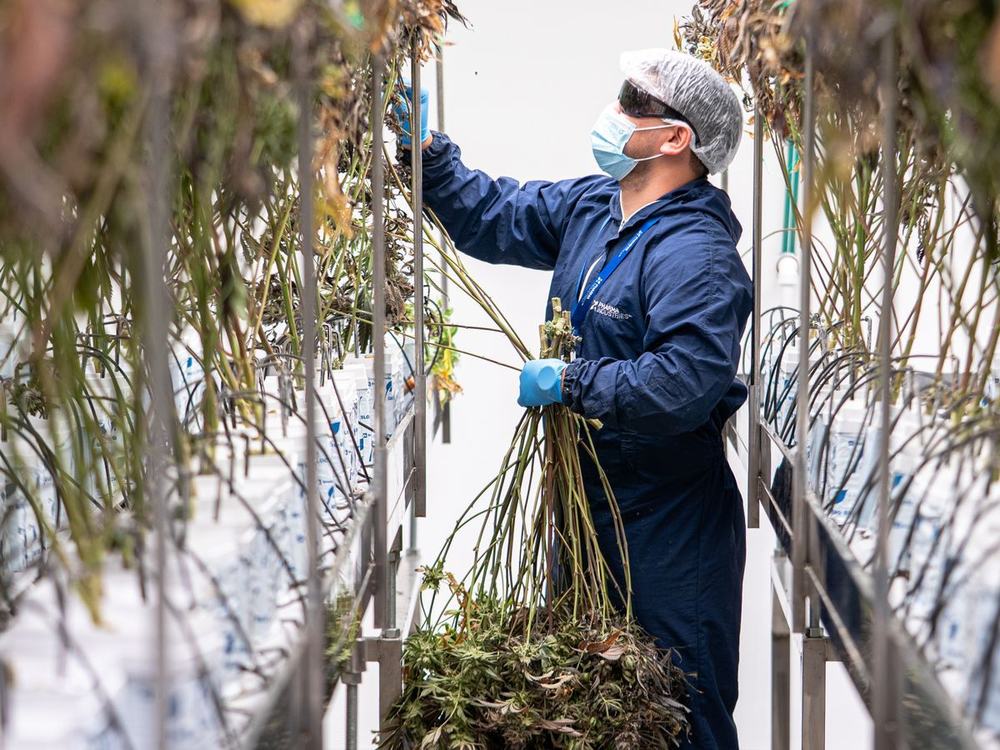
Hang the cut branches in a dark room at 60F and 60 percent relative humidity with gentle air movement for 7 to 14 days. Do not point a fan at the buds. Do not use heat. The bud is dry enough to jar when a small stem snaps rather than bends and the outside of the flower feels papery.
The 60/60 doctrine is the range where water leaves the bud slowly enough for chlorophyll to break down and terpenes to stay put. At 70F and 40 percent, a bud dries in three days, keeps its grassy smell and burns harsh. At 60F and 60 percent it takes ten. Put a cheap digital hygrometer at bud height. If the room runs dry, add a humidifier; if humid, run a dehumidifier or a small exhaust fan.
Keep the room dark, because light degrades THC on the bud surface. Space the branches so nothing touches, and check daily for gray fuzz or a musty smell, which is bud rot getting started. Big dense colas can be split lengthwise to dry the core.
The stem snap test is the only reliable finish line. Bend a stem the thickness of a matchstick. If it bends and stays, the inside is still wet; wait another day. If it cracks with a clean snap, jar it. Buds that look dry on day four are dry on the outside only, and jarring them then is how most mold happens.
What does curing weed do?
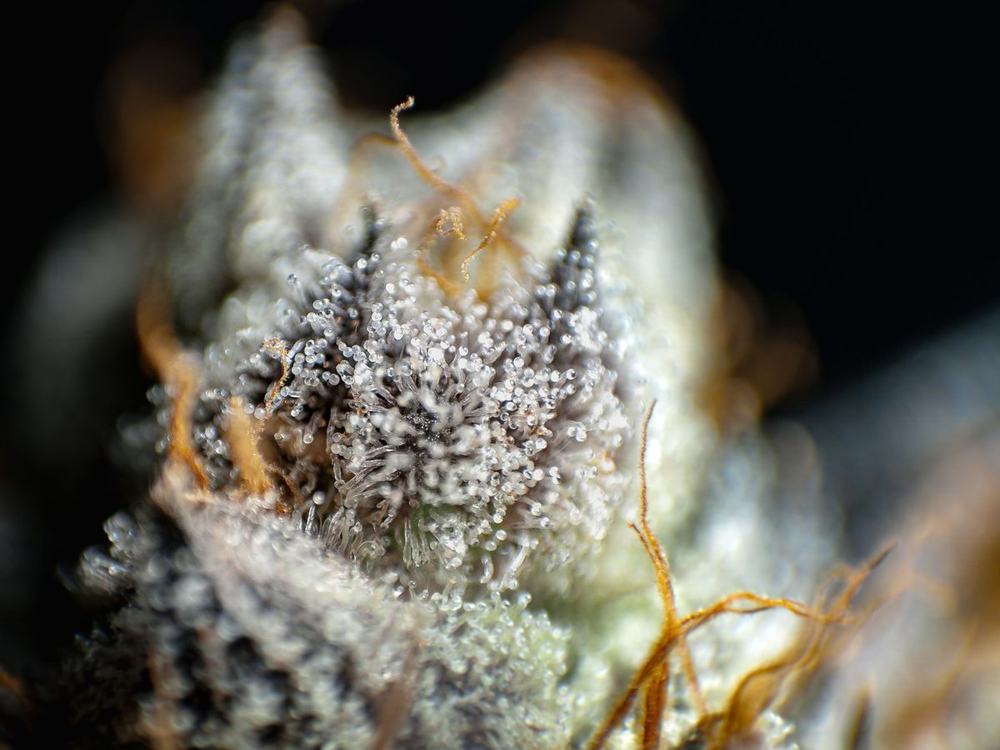
Curing lets the last moisture inside the bud move to the surface evenly, while enzymes finish breaking down chlorophyll and sugars that make fresh weed taste like hay. The result is smoother smoke, a sharper smell and a bud that stays at a stable moisture level instead of crumbling or going damp.
The bud that leaves the drying line is dry outside and slightly damp in the core. In a sealed jar the moisture equalises over days, and the burping schedule lets any excess out. Curing does not raise potency. It preserves what the trichome read told you was there at harvest.
How long to cure weed: the jar and burping schedule
Cure for at least two weeks and expect real improvement through week six. Most strains stop changing after about eight weeks. Use wide-mouth glass jars filled three quarters, kept in a dark cupboard at 60 to 70F, and open them on the schedule in the table.
Day-by-day drying and curing schedule from the cut to storage
| Stage | Target conditions | What to do | Check |
|---|---|---|---|
| Day 0, the cut | Dark, 60F, 60 percent RH | Hang branches with space between them, fan on low aimed at a wall | Hygrometer at bud height |
| Days 1 to 4 | 60F, 60 percent RH | Leave alone; check for mold | Outer leaves curling, stems still bend |
| Days 5 to 10 | 60F, 55 to 60 percent RH | Test a stem daily; trim off remaining sugar leaf when it crisps | Stem snaps clean, buds papery outside |
| Days 10 to 14 | Jar at 58 to 62 percent RH | Fill jars three quarters, add a hygrometer | If the jar reads above 65 percent, re-hang for a day |
| Weeks 2 to 3 | Jar, 58 to 62 percent RH, dark | Burp once daily for 10 to 15 minutes | Smell should be sweet, never musty or like ammonia |
| Weeks 4 to 8 | Jar, 58 to 62 percent RH, dark | Burp two or three times a week, then weekly | Bud springs back when squeezed |
| Month 3 onward | Sealed, 55 to 62 percent RH, dark, cool | Stop burping; store | Open every few weeks to check the smell |
Burping means opening the jar, letting it breathe, and closing it. A whiff of ammonia means the bud went in too wet; take it out and re-hang for a day.
Humidity packs and mold risk
A two-way humidity pack holds the jar at a fixed level. Boveda sells them at 58 and 62 percent for cannabis; 62 keeps the bud softer; 58 is safer if you tend to jar early. Add one per quart jar after the first two weeks of burping, not before, because a pack cannot fix a bud that went in wet.
Mold needs moisture and still air. A jar above 65 percent for more than a day, or a bud jarred before the stem snapped, is the usual cause. If you find gray or white fuzz, or a smell of damp basement, throw that jar's contents out.
How to store weed long term
Store cured weed in sealed glass, in the dark, at 55 to 65F and 55 to 62 percent humidity. Under those conditions it keeps for a year with modest loss; after that the terpenes fade and THC slowly converts to CBN. Light and heat are the enemies, in that order. A jar on a sunny shelf loses more in a month than one in a cool cupboard loses in a year. Plastic bags let terpenes escape and hold static that pulls trichome heads off; use them for a day, not a month. Vacuum sealing works for long storage if the bud is fully cured first. Trim and popcorn buds bound for hash can go straight into the freezer in a sealed bag.
The mistake most growers make when curing weed
I have watched hundreds of first grows, and the harvest that gets ruined is almost never ruined on the plant. It is ruined in a warm room in four days. The grower is impatient, the bud feels dry, it goes into a jar, and a week later it smells like cut grass and smokes harsh. That bud never recovers.
The fix is slow and boring. Get the room to 60/60 before you cut, hang the plant, and leave it for a week. Test a stem. Wait for the snap. Then jar and burp on the schedule. Ten days of patience is the cheapest quality upgrade in the whole grow guide.
Next step: what to do with the trim
With the buds jarred, the sugar leaf and small buds you trimmed off are the raw material for hash, which is the next chapter. If anything went wrong in the drying room, the bud rot page explains what you are looking at.
Cultivation is for adults where it is legal.
Sources
- Boveda: two-way humidity control packs (manufacturer spec for the 58 and 62 percent pack targets used in the humidity pack section)