

Grow Guide
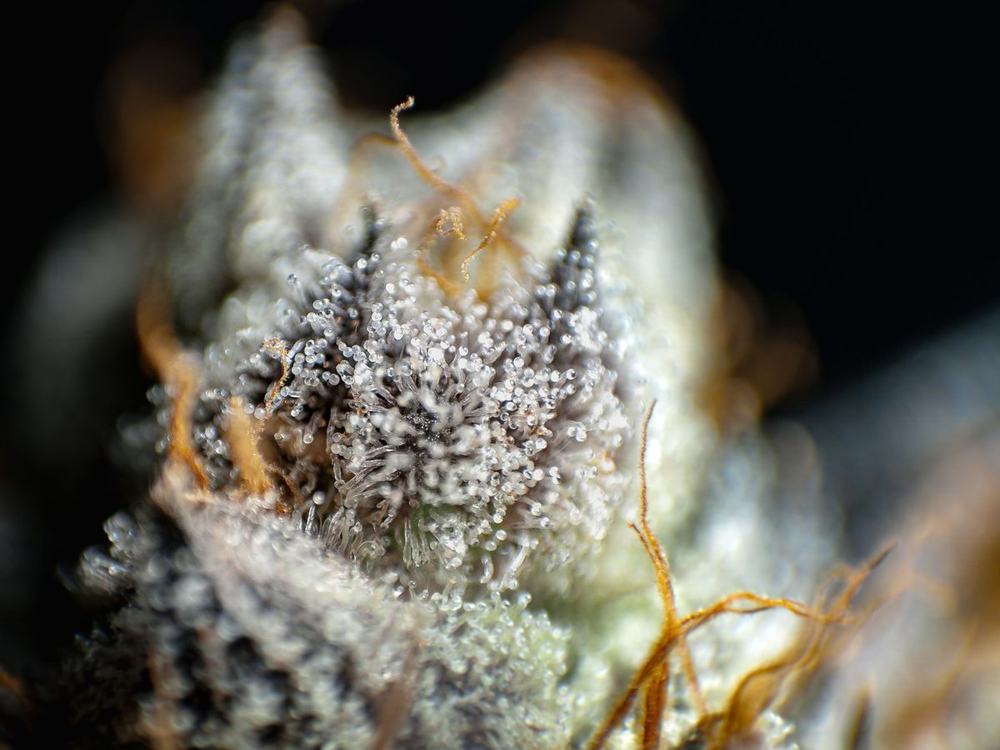
When to harvest weed comes down to two checks: the trichome heads on the calyxes have turned mostly cloudy with a little amber, and most of the pistils have darkened and curled in. When both agree, cut. Everything before that point is ripening, and every day after it is decline.
This chapter starts where the trichome read leaves off and covers the rest of harvesting cannabis: how long flowering runs by plant type, the pistil check, the flush question, whole-plant versus branch cuts, and wet trim versus dry trim.
How long does flowering last?
Flowering lasts 7 to 12 weeks for most photoperiod plants counted from the day you switch to 12 hours of light, and 7 to 10 weeks from sprout for most autoflowers. Indica-leaning strains finish at the short end, sativa-leaning strains at the long end. The seed packet gives a range, not a date.
Treat the breeder's number as the earliest you should start scoping, not the day you cut. A strain sold as "eight weeks" will often need nine or ten under a home grower's light and temperatures. Most growers who harvest early do it because the calendar said so. The week-by-week timeline lives in the stages of growth chapter; this page assumes you are near the end of it.
Typical flowering length and harvest window by plant type
| Plant type | Flowering length | Start scoping trichomes | Usual harvest window |
|---|---|---|---|
| Indica-dominant photoperiod | 7 to 9 weeks after the flip | Week 6 | Weeks 8 to 9 |
| Hybrid photoperiod | 8 to 10 weeks after the flip | Week 7 | Weeks 9 to 10 |
| Sativa-dominant photoperiod | 10 to 14 weeks after the flip | Week 9 | Weeks 11 to 13 |
| Autoflower | 7 to 10 weeks from sprout | Week 6 | Weeks 8 to 10 |
| Outdoor, northern US | Set by daylight, not the grower | Late August | Late September to mid October |
Outdoor plants follow the sun, and the Oregon State Extension hemp pages put most field harvests in late September and October for that latitude, with weather and mold pressure often forcing the date rather than ripeness.
When to harvest weed by the pistils
Pistils are the hairs on the bud. They start white, then turn orange, red or brown and curl inward as the calyx beneath them swells. When 70 to 90 percent have changed color and the bud looks fat rather than fuzzy, the plant is in its harvest window. Confirm with the loupe before you cut.
Pistils are a rougher signal than trichomes because they react to things other than ripeness. Heat, a brush of the hand, or a spray of water can brown them early. A late burst of new white pistils on a ripe bud is normal. Use pistils to tell you when to start scoping, and trichomes to make the decision.
Flushing before harvest
Flushing means feeding the plant plain water for the last 7 to 14 days so it uses up stored nutrients before the cut. Growers who flush say it gives a cleaner burn and whiter ash. Published trials have not shown a measurable difference in taste or cannabinoid content between flushed and unflushed flower. Do it if you want; it will not hurt the plant.
Flushing is tradition more than science. In heavily fed hydroponic or coco grows, dropping to plain water for the final week is cheap insurance against harsh smoke and costs nothing in yield. In living soil there is nothing to flush; water normally to the end. What matters far more is a slow, correct dry, which the drying and curing chapter covers.
The same goes for the 48 hours of darkness some growers give the plant before the cut, on the theory that trichome production spikes in the dark. No published trial shows it raises potency, and two dark days at the end of a twelve-week grow change almost nothing. It does no harm if the room stays cool and the air keeps moving.
Cutting the whole plant or branch by branch
Cut the whole plant at the base if the space is small and the plant ripened evenly. Cut branch by branch if the top buds are ripe and the lower ones need another week, or if the plant is too big to hang whole. Either way, cut in the morning, before the lights have been on long.
Whole-plant hanging dries slowest, which is usually good. Branch cutting lets you stagger the harvest on an uneven plant, and it is the only sane way to handle a big outdoor one. Leave the fan leaves on if your drying room is dry and take them off if it is humid.
The tools are simple: sharp pruning shears for stems, fine curved trimming scissors, nitrile gloves, isopropyl alcohol, a clean tray, and somewhere dark to hang the plant. Clean the blades with alcohol every twenty minutes; resin builds up fast and a gummed blade crushes rather than cuts. Trim over the tray so the sugar leaf is collected in one place. It makes decent hash later.
Wet trim vs dry trim
A wet trim removes the sugar leaves right after the cut, while the plant is still fresh. A dry trim hangs the whole branch and removes the leaves after drying. Wet trimming is faster and easier; dry trimming dries slower and preserves more terpenes. Choose based on your humidity.
Wet trimming cuts the drying time by a day or two, because there is less leaf holding moisture, and the leaves come off cleanly while they are stiff. Dry trimming leaves the sugar leaves on as a jacket around the bud, which slows the dry and protects the trichome heads. In a dry climate, dry trim. In a humid room where mold is a risk, wet trim and get air moving.
The mistake most growers make when harvesting cannabis
In eighteen years of answering Dear Danko letters, the most common harvest error was cutting on the calendar. The packet said eight weeks, week eight arrived, the plant came down. The result was airy buds, a racy effect and a lot of clear heads under the loupe. Add two weeks to whatever the breeder printed and let the plant tell you.
The second error is harvesting wet. A plant cut the day after a heavy watering carries more water into the drying room and takes longer to dry, which is time for mold to start. Stop watering two or three days before the cut.
Next step: drying and curing
The cut is the easy part. The next chapter on drying and curing is where most first harvests are actually lost, and it also covers storage. Check the bud rot page before you hang anything if your room runs humid. The whole sequence sits inside the grow guide.
Cultivation is for adults where it is legal.
Sources
- Oregon State University Extension: Hemp and cannabis crop production (used for the harvest-timing and field-drying guidance behind the flowering length table)