

Plant Problems
Yellow leaves on a weed plant mean one of six things: normal fade in late flower, nitrogen running short, roots drowning from overwatering, pH lockout, light burn at the canopy, or a magnesium shortage. Where the yellow starts and how it spreads tells you which one, usually within a minute of looking.
This page is the diagnosis: six causes sorted by pattern, one test to confirm each, and what to change. Feeding schedules live on the nutrients chapter; this page only tells you which knob to turn.
What Yellow Leaves on a Weed Plant Look Like
- Bottom up, whole leaf, even color. The oldest fan leaves go pale green, then lemon yellow, from the bottom upward while new growth stays dark. That is nitrogen leaving old leaves for new ones.
- Yellow between green veins. Middle and lower leaves yellow between the veins, the veins stay green, and rusty edges follow. That is magnesium.
- Yellow and limp together. Leaves droop, feel heavy and cool, the yellow is dull, and the pot is still heavy a day after watering. That is overwatering.
- Yellow that jumps around. Old and new leaves at once, with brown spots, burnt tips and twisted new growth in the same week. That is pH lockout.
- Yellow only at the top. Leaves nearest the lamp bleach to pale yellow or bone white while leaves a foot lower are fine. That is light burn.
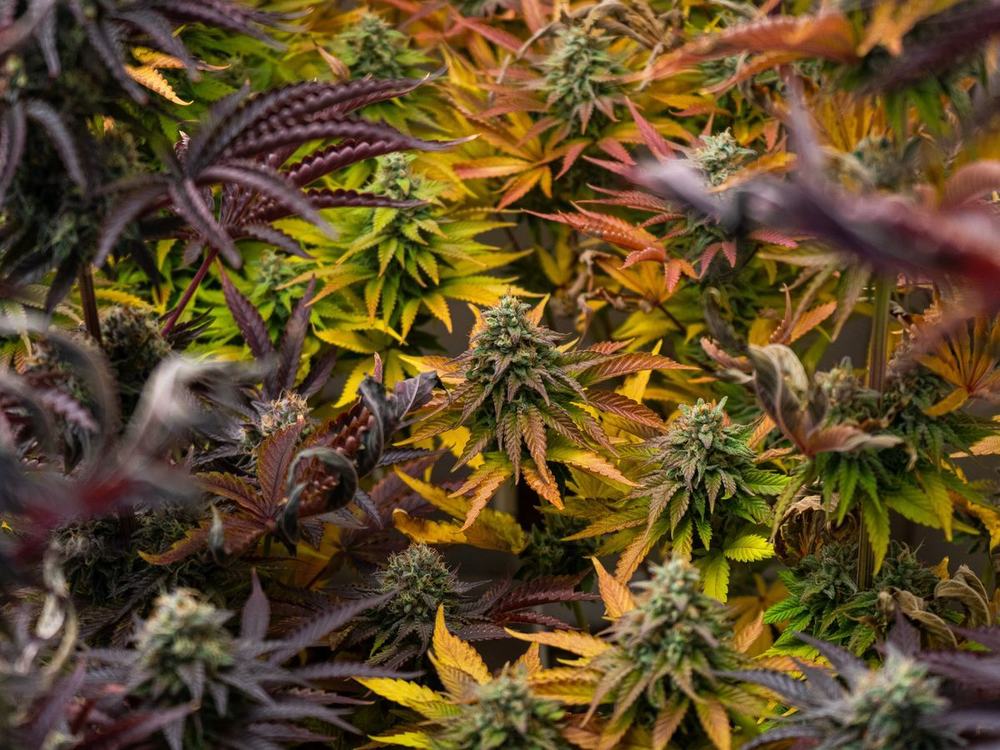
- Yellow fan leaves in the last two or three weeks of flower while buds keep swelling. That is the plant finishing. Normal.
What Causes Weed Plant Leaves Turning Yellow
Chlorophyll is what makes a leaf green, and the plant builds it from nitrogen and magnesium. Both are mobile: when supply runs short the plant pulls them out of old leaves into new growth, so old leaves lose their green first. Iron and calcium are immobile and show on new growth instead, so a pale top over green bottom leaves is almost never nitrogen.
Overwatering yellows leaves with nothing wrong in the feed: roots in saturated medium run out of oxygen and stop taking up nutrients.
pH lockout is the same starvation with a different cause. Outside a root zone pH of 6.0 to 7.0 in soil, or 5.5 to 6.5 in coco and hydro, nutrients are present but unavailable, and three or four deficiencies show at once.
Light burn is a leaf asked to process more photons than it can use, so the tissue bleaches.
Late flower yellowing is the plant stripping its fan leaves to finish the buds. Oregon State University's hemp extension guidance treats nitrogen as the nutrient the crop demands most in vegetative growth and least at the end, which is why a lean plant fades on schedule.
How to Confirm the Cause
Four checks, in order, with nothing needed beyond a pH pen.
- Position. Bottom up and even: nitrogen or normal fade. Between the veins: magnesium. Top only: light. Everywhere at once: pH.
- Lift the pot. Still heavy 24 hours after watering, with drooping leaves: overwatered, whatever the color.
- Test runoff. Catch the last cup that drains. Soil outside 6.0 to 7.0, or coco outside 5.5 to 6.5, confirms lockout. Runoff EC above 1.5 times your input means salt buildup.
- Count the weeks. Past the halfway point of flowering, with only fan leaves fading, the plant is on schedule. The weed plant stages chapter has the timeline.
Yellow leaf patterns matched to cause and fix
| Pattern | Which leaves | Progression | Likely cause | Fix |
|---|---|---|---|---|
| Even yellow, whole leaf | Oldest, lowest fan leaves | Climbs upward over 1 to 2 weeks | Nitrogen shortage | Feed veg ratio at full strength; new growth greens in 5 to 7 days |
| Yellow between green veins | Middle, then lower leaves | Rusty edges follow | Magnesium shortage | 1 gram Epsom salt per liter in the next two feeds |
| Dull yellow plus droop | Whole plant, lower first | Pot stays heavy for days | Overwatering | Dry the pot until it is light; water by weight |
| Yellow, spots and burnt tips together | Old and new leaves at once | Fast, inside a week | pH lockout | Flush 3 times pot volume at correct pH, then feed half strength |
| Bleached yellow to white | Top leaves only | Stops 30 cm below the lamp | Light burn | Raise the lamp 15 to 30 cm |
| Fan leaves yellow, buds swelling | Lower and middle | Weeks 6 to 9 of flower | Normal finish | Nothing; harvest on trichomes |
How to Fix Yellow Leaves
Fix the cause, not the color. Yellow leaves never turn green again; judge success by the next leaves out.
- Nitrogen: feed the vegetative ratio at full strength for two feeds. After week four of flower, leave it.
- Magnesium: one gram of Epsom salt per liter in the next two feeds, or cal-mag at label rate in coco.
- Overwatering: stop. Let the pot lose half its wet weight before watering again; if that takes more than three days, repot into a mix with 30 percent perlite. The watering chapter covers the weight method.
- pH lockout: flush with plain water at the correct pH, two to three times the pot volume, until runoff reads in range, then feed at half strength. Calibrate the pen first.
- Light burn: raise the lamp until a hand held flat on the canopy feels warm, not hot; under 1,000 micromoles in flower without added CO2.
- Late flower fade: leave it alone and harvest on the trichomes.
How to Prevent It
Check pH every feed. Water by lifting the pot. Drop the nitrogen when you switch to flower. Set lamp height by canopy temperature and meter, not by eye. Know what week you are in, so a normal fade does not send you for a bottle.
Looks Like This but Is Not
Three sibling pages cover the causes that get confused with plain yellowing.
- Nutrient deficiencies: potassium yellows the leaf edge with brown scorch behind it; iron yellows the newest top leaves with green veins. Neither is the bottom up pattern.
- Overwatering: the droop comes first and the yellow second. A plant standing stiff and upright is not overwatered.
- Light burn: only under the lamp, with leaf edges curled up like a taco. Yellow lower leaves under a close lamp are a separate problem, usually nitrogen.
The Mistake Most Growers Make
Feeding more. In eighteen years of Dear Danko letters, the photo attached to "my plant is hungry" showed overwatering or a pH problem at least as often as nitrogen. Nutrients poured into a locked out or drowned root zone raise the EC, deepen the lockout, and burn the tips within a week. Test first. Feed only when runoff pH and pot weight are normal and the pattern is bottom up.
Next Step: Read the Full Leaf Chart
Once the cause is sorted, read the full leaf symptom chart and keep the plant problems index bookmarked. Cultivation is for adults where it is legal.
Sources
- Oregon State University Extension: Hemp (used for nitrogen demand being highest in vegetative growth and lowest at the end of the cycle)